
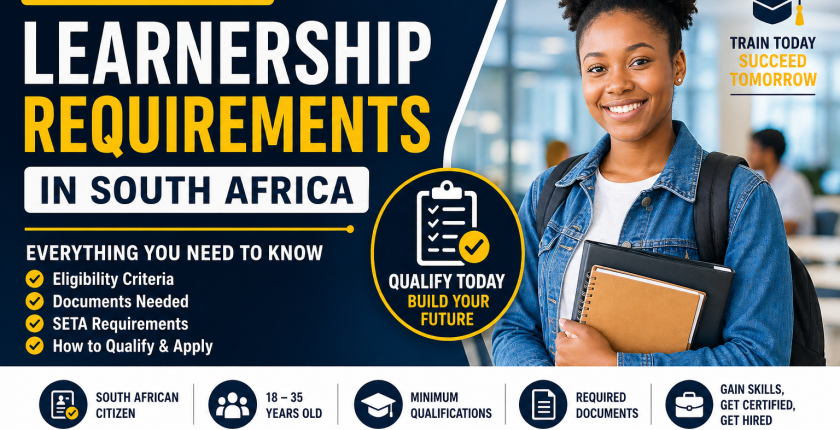
Learnership Requirements in South Africa (2026)- How to Apply
Introduction
Learnership Requirements in South Africa (2026)- How to Apply. Learnerships continue to play a vital role in addressing youth unemployment in South Africa. They provide a structured pathway for individuals to gain both theoretical knowledge and practical work experience, ultimately leading to a nationally recognized qualification.
However, one of the biggest challenges applicants face is understanding learnership requirements in South Africa. Many candidates apply without meeting the minimum criteria, resulting in missed opportunities.
This comprehensive 2026 guide will break down everything you need to know about learnership requirements—from basic eligibility to advanced criteria—helping you prepare effectively and improve your chances of success.
What Are Learnership Requirements?
Learnership requirements refer to the minimum qualifications, documents, and eligibility criteria needed to apply for and be accepted into a learnership programme.
These requirements are set by:
- Employers
- Training providers
- Sector Education and Training Authorities (SETAs)
Learnerships are regulated under the framework of the
👉 South African Qualifications Authority
which ensures that all programmes meet national education standards.
Why Understanding Learnership Requirements is Important
Understanding requirements before applying allows you to:
- Avoid automatic disqualification
- Prepare correct documentation
- Apply to relevant programmes
- Save time and effort
- Increase your chances of being shortlisted
If you are actively looking for opportunities, explore verified listings here:
👉 Career325.com
Basic Learnership Requirements in South Africa (2026)
Most learnerships share a common set of baseline requirements.
1. South African Citizenship
Applicants must be South African citizens and provide a valid ID document.
2. Age Requirement
- Typically between 18 and 35 years old
- Some programmes may accept older applicants
3. Educational Qualification
Minimum education depends on the programme:
- Grade 10 or 11 – Entry-level learnerships
- Matric (Grade 12) – Most common requirement
- Diploma/Degree – Advanced or specialized learnerships
4. Employment Status
- Must be unemployed at the time of application
- Must not be enrolled in another learnership or internship
5. Language Proficiency
- Basic understanding of English
- Some roles may require additional languages
SETA-Specific Learnership Requirements
Learnerships are administered by various SETAs, each focusing on a specific industry.
Examples include:
- Banking SETA
- Services SETA
- Construction SETA
- Mining Qualifications Authority (MQA)
Each SETA may require:
- Specific school subjects (e.g., Mathematics, Science)
- Industry-related qualifications
- Aptitude assessments
Learn more about SETA programmes here:
👉 SETA
(This is an official government resource for learnerships in South Africa.)
Documents Required for Learnership Applications
Having the correct documents is essential for a successful application.
Mandatory Documents:
- Certified copy of South African ID
- Updated CV
- Certified copy of Matric certificate
- Academic transcripts (if applicable)
Additional Documents (if required):
- Proof of residence
- Cover letter
- Driver’s license (for certain roles)
- Medical certificate (for physically demanding jobs)
Important Tip:
All documents must be certified within the last 3 months.
Academic Requirements by Learnership Type
1. Entry-Level Learnerships
- Grade 10 or 11
- Basic literacy and numeracy skills
2. Intermediate Learnerships
- Matric certificate
- Pass in English
- Sometimes Maths or Maths Literacy
3. Advanced Learnerships
- Diploma or degree
- Industry-specific knowledge
- Technical skills
Skills Required for Learnerships
Beyond academic qualifications, employers look for soft and technical skills.
Essential Skills:
- Communication skills
- Teamwork
- Time management
- Problem-solving
- Adaptability
Technical Skills (varies by industry):
- Computer literacy
- Data entry
- Customer service
- Technical or mechanical skills
Industry-Specific Learnership Requirements
1. Retail Learnerships
- Matric preferred
- Customer service skills
- Basic numeracy
2. Banking & Finance Learnerships
- Matric with Mathematics
- Strong communication skills
- Attention to detail
3. Engineering Learnerships
- Mathematics and Science
- Technical aptitude
- Physical fitness
4. IT Learnerships
- Computer literacy
- Basic coding (optional but beneficial)
- Analytical thinking
Additional Requirements Employers May Consider
Employers often assess more than just qualifications.
1. Attitude and Work Ethic
A positive attitude can significantly improve your chances.
2. Willingness to Learn
Learnerships are training programmes—employers value eagerness.
3. Reliability
Punctuality and commitment are critical.
Common Disqualifying Factors
Many applicants are rejected due to avoidable mistakes.
Avoid the Following:
- Incomplete applications
- Incorrect or missing documents
- Applying without meeting requirements
- Submitting outdated certifications
- Providing false information
How to Check if You Meet Learnership Requirements
Before applying:
- Read the job advert carefully
- Compare your qualifications with requirements
- Prepare all documents
- Ensure eligibility criteria are met
Explore current opportunities here:
👉 More Latest Learnerships
How to Improve Your Eligibility
If you do not meet certain requirements, you can still prepare.
1. Upgrade Your Education
- Complete Matric
- Enroll in short courses
2. Gain Basic Skills
- Computer literacy
- Communication skills
3. Volunteer or Intern
- Gain practical experience
4. Take Online Courses
Platforms like
👉 Coursera
offer free and paid courses to improve your skills.
Internal Resources to Help You Apply
To strengthen your application, use these guides:
- CV Writing Guide: How to write CV
- Latest Internships: Internships
- Jobs with No Experience: Entry – Level jobs
Difference Between Learnership Requirements and Internship Requirements
| Aspect | Learnership | Internship |
|---|---|---|
| Qualification | Required | Sometimes optional |
| Certification | Yes | No |
| Duration | 12 months | 3–12 months |
| Focus | Training + Work | Work experience |
How Employers Shortlist Candidates
Employers typically evaluate:
- Educational qualifications
- Relevant skills
- Quality of CV
- Completeness of application
- Interview performance
What Happens After You Meet the Requirements?
Once you qualify:
- Submit your application
- Wait for shortlisting
- Attend interviews or assessments
- Receive offer if successful
Tips to Successfully Meet Learnership Requirements
1. Read Instructions Carefully
Follow every detail in the application.
2. Prepare Documents Early
Avoid last-minute stress.
3. Customize Your CV
Match your CV to the learnership.
4. Apply to Multiple Opportunities
Increase your chances of success.
Frequently Asked Questions (FAQs)
1. Can I apply without Matric?
Yes, some learnerships accept Grade 10 or 11.
2. Do I need work experience?
No, learnerships are designed for beginners.
3. Are learnerships free?
Yes, legitimate learnerships are free and include a stipend.
4. Can I apply for multiple learnerships?
Yes, and it is highly recommended.
Conclusion
Understanding the learnership requirements in South Africa for 2026 is the first and most important step toward securing a valuable opportunity. By meeting the eligibility criteria, preparing the right documents, and improving your skills, you position yourself as a strong candidate in a competitive job market.
Take advantage of available resources, stay consistent, and apply strategically.
Call to Action
Ready to start your journey?
Explore the latest verified learnership opportunities here:
👉 Find latest learnerships
