
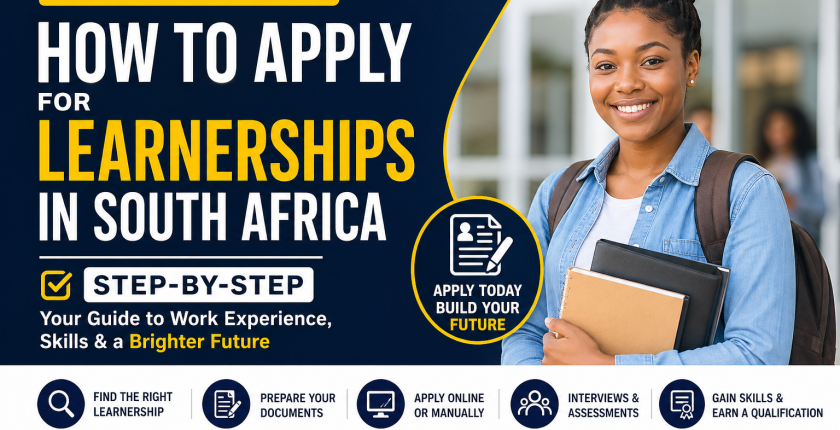
How to Apply for Learnerships in South Africa (2026)
Introduction
Learnerships have become one of the most effective pathways for young South Africans to gain practical work experience while earning a qualification. With unemployment remaining a significant challenge, especially among youth, learnership programmes offer a structured bridge between education and employment.
If you are looking to secure a learnership in 2026, understanding the application process is critical. Many candidates miss opportunities simply because they do not follow the correct steps, submit incomplete documents, or fail to meet basic requirements.
This comprehensive guide will walk you through how to apply for learnerships in South Africa step-by-step, including eligibility requirements, documents needed, where to find opportunities, and expert tips to improve your chances of success.
What is a Learnership?
A learnership is a work-based learning programme that combines:
- Theoretical training (through an accredited training provider)
- Practical workplace experience (with an employer)
Learnerships are managed by Sector Education and Training Authorities (SETAs) and lead to a nationally recognized qualification registered on the National Qualifications Framework (NQF).
Key Benefits:
- Monthly stipend
- Practical work experience
- National qualification
- Improved employability
- Potential permanent employment
Minimum Requirements for Learnerships in South Africa
Before applying, ensure you meet the general eligibility criteria:
Basic Requirements:
- Must be a South African citizen
- Age between 18 and 35 years
- Must have a Grade 10, 11, or 12 (Matric) depending on the programme
- Unemployed at the time of application
- Not currently participating in another learnership
Additional Requirements (varies by programme):
- Specific subjects (e.g., Maths, English)
- Relevant qualifications (for advanced learnerships)
- Computer literacy
- Clear criminal record
Step-by-Step Guide to Applying for Learnerships
Step 1: Identify the Right Learnership Opportunities
The first step is finding available learnership programmes that match your qualifications and interests.
You can explore verified opportunities here:
👉 HERE
Recommended Pages:
Browse more learnerships
Tip: Focus on industries with high demand such as:
- Retail
- Banking
- Mining
- Engineering
- IT and Digital Skills
- Government SETA programmes
Step 2: Understand the Application Requirements
Each learnership has its own requirements. Carefully read:
- Job description
- Required qualifications
- Application deadline
- Required documents
Failure to follow instructions is one of the main reasons applicants get rejected.
Step 3: Prepare Your Documents
Before applying, ensure you have all required documents ready and certified.
Essential Documents:
- Updated CV
- Certified copy of ID
- Certified copy of Matric certificate
- Academic transcripts (if applicable)
- Proof of residence
- Cover letter (optional but recommended)
Important: Certification should not be older than 3 months.
Step 4: Create a Professional CV
Your CV is your first impression. It must be clear, professional, and tailored.
CV Structure:
- Personal Information
- Career Objective
- Education
- Skills
- Work Experience (if any)
- References
Key Tips:
- Keep it 1–2 pages
- Use simple formatting
- Highlight relevant skills
- Avoid spelling mistakes
For more guidance, read:
👉 How to write your cv
Step 5: Write a Strong Cover Letter
Although not always required, a cover letter can significantly boost your application.
What to Include:
- Why you are applying
- Your relevant skills
- Your career goals
- Why you are a good fit
Keep it short, professional, and tailored to the learnership.
Step 6: Apply Online or Submit Manually
Learnership applications can be submitted in different ways:
Online Applications:
- Company websites
- Job portals
- Email submissions
Manual Applications:
- Hand delivery at company offices
- Submission at training centers
Tip: Always follow the exact submission method stated in the advert.
Step 7: Track Your Applications
Keep a record of:
- Companies applied to
- Dates of application
- Closing dates
This helps you follow up and stay organized.
Step 8: Prepare for Assessments and Interviews
If shortlisted, you may be required to complete:
- Aptitude tests
- Psychometric assessments
- Interviews
Interview Tips:
- Dress professionally
- Arrive early
- Research the company
- Practice common questions
Step 9: Follow Up
If you don’t receive feedback within a few weeks, follow up politely via email.
Where to Find Learnerships in South Africa
Finding legitimate opportunities is crucial. Many applicants fall victim to scams.
Trusted Sources:
- Company websites
- Government portals
- SETA websites
- Verified job platforms
Explore verified listings here:
👉 Career325.com
Top Industries Offering Learnerships
1. Retail
Companies like supermarkets and wholesalers frequently offer learnerships.
2. Banking & Finance
Banks offer programmes in customer service and financial services.
3. Mining & Engineering
High demand for technical skills and artisans.
4. IT & Digital Skills
Growing demand for coding, data, and tech-related roles.
5. Government & Public Sector
Various departments offer structured learnership programmes.
Common Mistakes to Avoid
Avoid these common pitfalls:
- Submitting incomplete applications
- Missing deadlines
- Using an unprofessional CV
- Applying for irrelevant positions
- Not following instructions
- Ignoring email communication
Tips to Increase Your Chances of Success
1. Apply Early
Do not wait until the closing date.
2. Apply to Multiple Opportunities
Increase your chances by applying widely.
3. Tailor Each Application
Customize your CV and cover letter.
4. Improve Your Skills
Consider short courses in:
- Computer literacy
- Communication skills
- Industry-specific training
5. Stay Consistent
Success may take time—keep applying.
How Long Does the Learnership Process Take?
The process typically includes:
- Application period: 2–4 weeks
- Shortlisting: 2–6 weeks
- Interviews/assessments: 1–3 weeks
- Final selection: 2–4 weeks
Total duration: 1–3 months
What Happens After You Are Accepted?
Once selected:
- You sign a learnership agreement
- You begin training (theory + practical)
- You receive a monthly stipend
- You complete assessments
- You obtain a qualification
Can Learnerships Lead to Permanent Jobs?
Yes, many employers use learnerships to recruit future employees.
However, permanent employment is not guaranteed. Performance and company needs play a major role.
Learnership Stipends in South Africa
Stipends vary depending on the programme and level:
- Entry-level: R1,500 – R3,000 per month
- Advanced programmes: R3,000 – R6,500 per month
Learnership vs Internship vs Apprenticeship
| Programme | Focus | Qualification | Duration |
|---|---|---|---|
| Learnership | Theory + Practical | Yes | 12 months |
| Internship | Work experience | No | 3–12 months |
| Apprenticeship | Technical skills | Yes | 2–4 years |
Explore more opportunities:
👉 Apprenticeship
Frequently Asked Questions (FAQs)
1. Can I apply without Matric?
Yes, some learnerships accept Grade 10 or 11.
2. Are learnerships free?
Yes, legitimate learnerships are free and paid.
3. Can I apply for multiple learnerships?
Yes, and it is highly recommended.
4. Do I need experience?
No, most learnerships are designed for beginners.
Conclusion
Applying for learnerships in South Africa can be a life-changing opportunity if done correctly. By following this structured, step-by-step process, you significantly improve your chances of being selected.
Consistency, preparation, and attention to detail are key. Make sure your documents are professional, your applications are complete, and you actively search for opportunities.
To start applying today and explore the latest opportunities, visit:
Call to Action
Looking for the latest learnerships, internships, and entry-level jobs in South Africa?
👉 Visit Career325 and start your career journey today.
Trusted website for more opportunities
